

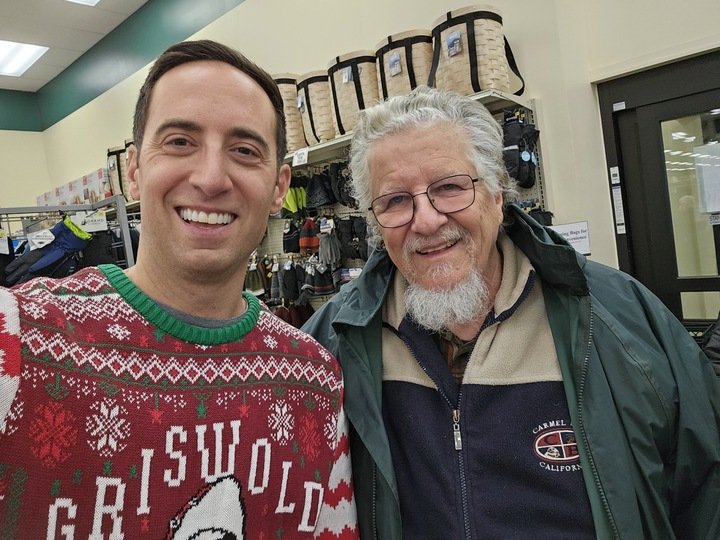
If you’ve been watching NEWS CENTER Maine and noticed that Aaron Myler seems to have gone quiet, you’re not alone. A lot of viewers have typed that exact question into Google. It’s a totally natural thing to wonder about someone you see on your TV regularly.
This article isn’t going to pretend to have answers that don’t exist. Instead, we’ll walk you through who Aaron Myler is, what his real connection to Channel 6 is, whether there’s any confirmed news about him leaving, and how you can find reliable answers on your own.
Who Is Aaron Myler and What Is His Connection to Channel 6?
Aaron Myler is a broadcast journalist who built his career the traditional way. He studied at Point Park University, earned his degree, and worked his way into local TV news. He’s not a national face — he’s a working regional journalist doing the kind of daily storytelling that keeps local communities informed.
The “Channel 6” most connected to his name is NEWS CENTER Maine, specifically WCSH — the Tegna-owned NBC affiliate based in Portland, Maine. Locals have called it “Channel 6” for years, so when people search for him in relation to that name, that’s almost certainly the station they mean.
Point Park University’s own news page confirmed that NEWS CENTER Maine hired Aaron Myler after he graduated. That’s the clearest, most reliable public link between him and the station. NEWS CENTER Maine also includes WLBZ in Bangor, and both operate under the shared NEWS CENTER Maine brand — which is why the “Channel 6” label gets attached to the whole operation.
In his own words, Aaron said that Point Park gave him a realistic look into the TV industry and that his classes were led by working professionals. He also emphasized the importance of being open to learning when you’re new and working alongside people with far more experience. That kind of attitude is pretty typical of journalists who are serious about building a long-term career in news.
Has There Been Any Official Announcement About Him Leaving?
Here’s the honest answer: as of now, there is no widely available official announcement — no press release, no on-air farewell, no verified statement from the station or from Aaron himself — confirming that he has left Channel 6.
That doesn’t automatically mean nothing has happened. It just means that if anyone is making specific claims about why he left, those claims aren’t based on public, verified information. They’re speculation at best.
Think of this article as helpful context, not a breaking news report. If an official announcement becomes available, the details here would need to be updated accordingly. But right now, there simply isn’t a confirmed, documented reason to report.
It’s worth being a little skeptical of any site that confidently tells you exactly why he left Channel 6 — because no public source backs that up.
Why Viewers Often Think a Reporter Has Left the Station
This happens more often than you’d think, and it usually has a pretty boring explanation.
Imagine you watch the morning news every day and one week you notice a different reporter filling that slot. Then it happens again the next day. By day three, you’re Googling “Why did they leave?” — but the reality might just be that they’re on vacation, covering a story elsewhere, or working a rotated shift schedule.
Local TV stations also update their websites quietly. A bio page gets removed or edited without any on-air explanation. From the outside, it can look like someone vanished overnight, even when the reality is completely routine.
Fill-in anchors and reporters are a completely normal part of how newsrooms work. Their presence on screen doesn’t automatically signal that a regular team member is gone for good.
There’s also a content cycle worth understanding. SEO-driven websites often publish “Is [name] leaving?” articles based on very thin signals — a few searches here, a missing bio there. Those articles then drive more searches, which creates the impression that something significant happened, even when no real event triggered it in the first place. It becomes a bit of a self-fulfilling loop.
Common Reasons TV Journalists Move On From a Station
Even though none of these can be applied to Aaron specifically right now, it helps to understand why reporters in local news do eventually leave a station. It’s almost always one of a handful of familiar reasons.
Moving to a Larger Market
This is probably the most common reason early-career journalists leave a smaller station. Local TV news has a well-worn career ladder: you start in a smaller city, build your skills, and then move to a bigger market with a larger audience and better pay. It’s a promotion, not a controversy. A reporter leaving Portland, Maine for a station in Boston or New York is simply doing what the industry expects them to do at a certain point.
Shifting Behind the Camera
Some reporters step away from on-air work entirely. They move into producing, digital content, public relations, or corporate communications. These transitions are common and often happen quietly — a LinkedIn update is sometimes the only public signal that anything changed at all.
Station-Level Changes
Budget cuts, restructuring, and contract non-renewals happen regularly at Tegna-owned stations and across the broadcast industry generally. Sometimes a reporter leaves because the station made a business decision, not because the reporter wanted to go. These situations rarely come with public explanations.
Personal Reasons
Local TV news is demanding work. The hours are long, the pay in smaller markets is often modest, and the pace doesn’t slow down. After a few years, some journalists decide the lifestyle isn’t sustainable for them — especially if they have family changes, health considerations, or simply want a different kind of career. Aaron himself noted that Point Park prepared him for a realistic view of the TV industry. That kind of clarity can also help someone recognize when it’s time to step back.
High turnover is a built-in feature of local news, particularly in small and mid-sized markets. Viewers form real, genuine connections with the people they see every morning. So when something changes, it feels significant — even when it’s completely routine from the station’s perspective.
How to Find Reliable Answers on Your Own
If you want to know what’s actually going on with a local reporter or anchor, the most dependable places to look are the simplest ones.
- The station’s staff page: Check NEWS CENTER Maine’s official website. If Aaron’s bio is still listed, that tells you something. If it’s gone, that’s another data point — though still not a full explanation.
- The station’s official social media: Stations sometimes post farewell tributes or announcements when a team member moves on. Not always, but sometimes.
- Aaron’s own professional accounts: LinkedIn is usually the most reliable place for career updates. If he’s moved to a new role, he may have posted about it there.
What you want to avoid is treating speculation from anonymous forums, random blog posts, or algorithmically generated “leaving” articles as actual news. Those sources rarely have verified information, and they often exist purely to capture search traffic — not to inform you.
For general career and business context on how professionals navigate transitions like these, resources like Flock Business can offer useful, grounded perspectives.
The Bottom Line
Aaron Myler is a real, working broadcast journalist with a verified connection to NEWS CENTER Maine — Channel 6 in Portland, Maine. He came up through Point Park University and entered local TV news the honest, hard-working way.
But as of right now, there’s no confirmed, publicly available explanation for why he may or may not be leaving Channel 6. Any article claiming to have that answer with certainty isn’t working from verified facts.
What’s much more likely is that the question itself was triggered by something routine — a schedule change, a quiet staff update, or a search algorithm doing what search algorithms do. Those things happen constantly in local news, and they almost always have unremarkable explanations.
If you want to stay updated, check the official station page and Aaron’s professional profiles directly. That’s always going to be more reliable than a third-party article — including this one.
Read Also: