
Most people who come across the name Lucy Lindsay-Hogg find it through a search about Princess Margaret, Lord Snowdon, or a scene from Netflix’s The Crown. She is not a public figure in the conventional sense, yet her name turns up regularly in royal biographies, genealogical records, and dramatizations of one of the twentieth century’s most talked-about royal marriages.
This article covers who Lucy Lindsay-Hogg is, what is known about her life before Lord Snowdon, her marriage to Antony Armstrong-Jones, their daughter Lady Frances, and why different sources tell slightly different stories about how that marriage ended.
Who Lucy Lindsay-Hogg Is
Lucy Lindsay-Hogg was born Lucy Mary Davies. She is not a celebrity or royal figure in her own right, and very little public information exists about her early life, career, or independent biography.
She is best known as the second wife of Antony Armstrong-Jones, 1st Earl of Snowdon — the man who was previously married to Princess Margaret, Queen Elizabeth II’s younger sister. That connection is what puts Lucy’s name into royal history books, and it is also why she appears as a character in The Crown.
Publications like Town & Country and ELLE have both covered her life, but primarily through her relationship with Snowdon. Most of what is documented about her relates to her marriages and family rather than anything she has done in public life.
Her First Marriage and the Lindsay-Hogg Name
Before she ever crossed paths with Lord Snowdon, Lucy Mary Davies married someone else entirely. In 1967, she wed Michael Lindsay-Hogg, a British director known for his work in film, television, and theater.
The marriage did not last long. Genealogical records from sources including Geni.com confirm they divorced around 1971, just a few years after they wed. Lucy kept the Lindsay-Hogg name, which is how she appears in later records.
Michael Lindsay-Hogg held the title of Sir Michael Edward Lindsay-Hogg, 5th Baronet. His family background carries an interesting footnote: though he was raised as the son of Sir Edward Lindsay-Hogg, genealogical records indicate his biological father was filmmaker Orson Welles, and his mother was actress Geraldine Fitzgerald. That detail belongs to Michael’s story, not Lucy’s, but it helps explain why the Lindsay-Hogg name carries some weight in both aristocratic and artistic circles.
Through this first marriage, Lucy became loosely connected to the Lindsay-Hogg baronet family and a creative lineage that spans Hollywood and British theater — though she was not part of that world in any documented public way.
Marriage to Lord Snowdon
To understand Lucy’s second marriage, it helps to know a little about the man she married.
Antony Armstrong-Jones was a society photographer who became one of the most recognized figures connected to the British royal family. He married Princess Margaret in 1960, becoming the 1st Earl of Snowdon. It was a high-profile union that attracted significant media attention throughout the 1960s and into the 1970s.
The marriage struggled for years before it ended. Princess Margaret and Lord Snowdon divorced in 1978, after eighteen years together. Snowdon’s family background was itself a blend of worlds: his father was Welsh barrister Ronald Armstrong-Jones, his mother was Anne Messel, and through her side he was connected to stage designer Oliver Messel and Punch cartoonist Linley Sambourne. He came from a lineage that mixed law, aristocracy, and the arts.
Later that same year, Lucy married Lord Snowdon. Genealogical records, including an entry from GWB Vintage, place the marriage date at December 17, 1978. This is consistent with the date listed in Wikipedia’s entry on Antony Armstrong-Jones, which records the marriage as beginning in 1978.
With this marriage, Lucy became Lucy Mary Lindsay-Hogg, Countess of Snowdon.
A Simple Timeline
- 1960: Antony Armstrong-Jones marries Princess Margaret.
- 1967: Lucy Davies marries Michael Lindsay-Hogg.
- ~1971: Lucy and Michael Lindsay-Hogg divorce.
- 1978: Princess Margaret and Lord Snowdon divorce.
- December 1978: Lucy Lindsay-Hogg and Lord Snowdon marry.
This sequence helps explain how two people from separate but loosely overlapping social worlds ended up together in the same year that Snowdon’s first marriage formally ended.
Their Daughter, Lady Frances Armstrong-Jones
Lucy and Lord Snowdon had one child together: Lady Frances Armstrong-Jones. She is Snowdon’s child from his second marriage and is distinct from his children with Princess Margaret — David, Viscount Linley, and Lady Sarah Armstrong-Jones.
Lady Frances later married Rodolphe von Hofmannsthal, whose family carries both literary and financial heritage, and became known as Lady Frances von Hofmannsthal. She occasionally appears in royal-adjacent coverage but, like her mother, is not a prominent public figure.
Lady Frances represents the most direct legacy of Lucy and Snowdon’s marriage. For readers tracking family trees or genealogical connections, she is an important link between the Armstrong-Jones line, the Windsor circle, and the von Hofmannsthal family.
The End of the Marriage — and Why Sources Disagree
This is one of the more genuinely uncertain parts of the story, and it is worth handling carefully.
Many sources, including Wikipedia, record that Lucy and Lord Snowdon divorced in 2000. This version appears often in royal biographies and summary articles. The commonly cited reason for the breakdown was a report that Snowdon had fathered a son outside the marriage with journalist Melanie Cable-Alexander.
However, a Sunday Times report — summarized by both Town & Country and Yahoo Lifestyle — offers a different account. According to that reporting, Lucy and Snowdon separated in 1998 but never legally divorced. This version came to light around the time of their daughter Frances’s wedding in 2006.
So which is correct? Both versions have been reported by mainstream outlets. Wikipedia uses “div. 2000,” while other sources flag that the legal status of the marriage may never have been formally resolved. The honest answer is that the public record contains both accounts, and neither has been definitively settled in what is available to the general public.
What is clear is that the marriage effectively ended in the late 1990s, after roughly two decades together.
Lucy in The Crown and Popular Culture
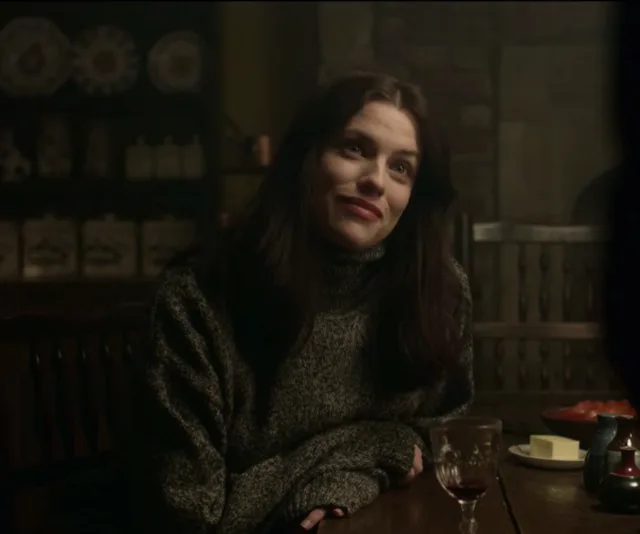
For many people, the first time they hear Lucy’s name is while watching The Crown on Netflix. The series covers the breakdown of the Snowdon–Margaret marriage and depicts Lucy as Snowdon’s companion after that relationship ends.
As ELLE and Town & Country have both noted, the show’s portrayal is dramatic by nature. Timelines get compressed, and personalities are shaped for television. The factual record — drawn from genealogical sources, royal biographies, and mainstream reporting — tells a quieter story. Lucy was not a public figure during her marriage to Snowdon, and the show’s depiction reflects the limited real-world documentation available.
If you arrived at Lucy’s name through The Crown, it is worth knowing that most of the confirmed biographical detail about her is exactly what is covered here: her name changes, her marriages, her daughter, and her place in the broader Armstrong-Jones family story.
What We Can and Cannot Say About Lucy Lindsay-Hogg
Lucy Lindsay-Hogg is one of those historical figures whose life is well-documented in terms of dates and family connections but almost entirely private in everything else. There are no known interviews, no documented professional career, and no public statements attributed to her in the sources available.
She was born Lucy Mary Davies, married twice, became a mother, and shared a significant portion of her adult life with one of the more photographed men in twentieth-century British aristocratic circles. That is the shape of what the public record contains.
For readers interested in the broader world of royal history, biography, and the figures who move through it without necessarily seeking the spotlight, resources like Flock Business cover a range of profile and background topics in a similarly grounded way.
Final Thoughts
Lucy Lindsay-Hogg occupies a quiet but real place in royal history. She was not a princess, not a public celebrity, and not someone who sought out the spotlight. What she was is the second wife of Lord Snowdon, the mother of Lady Frances Armstrong-Jones, and a person whose name carries the trace of two marriages and the complex family networks they connected.
The story around her is largely told through the people she was connected to — Snowdon, Princess Margaret, Michael Lindsay-Hogg, and their daughter. But within that context, her role is clear and documented. She was part of a chapter in royal history that The Crown has brought back into public conversation, and the facts of her life, modest as they are in the public record, deserve to be told accurately.
Also Read: